

The WNBA has experienced significant growth over the past few years. Though it’d be great to attribute it to pure talent, that only tells part of the story.
Outsiders want drama, intense storylines and rivalries — with a touch of good basketball.
Even lifelong fans can’t resist a touch of “spiciness” to add to their fandom. However, for broadcasts, social media, blogs and journalistic outlets, when does it start straying from the factual realm and become a “hot topic” section?
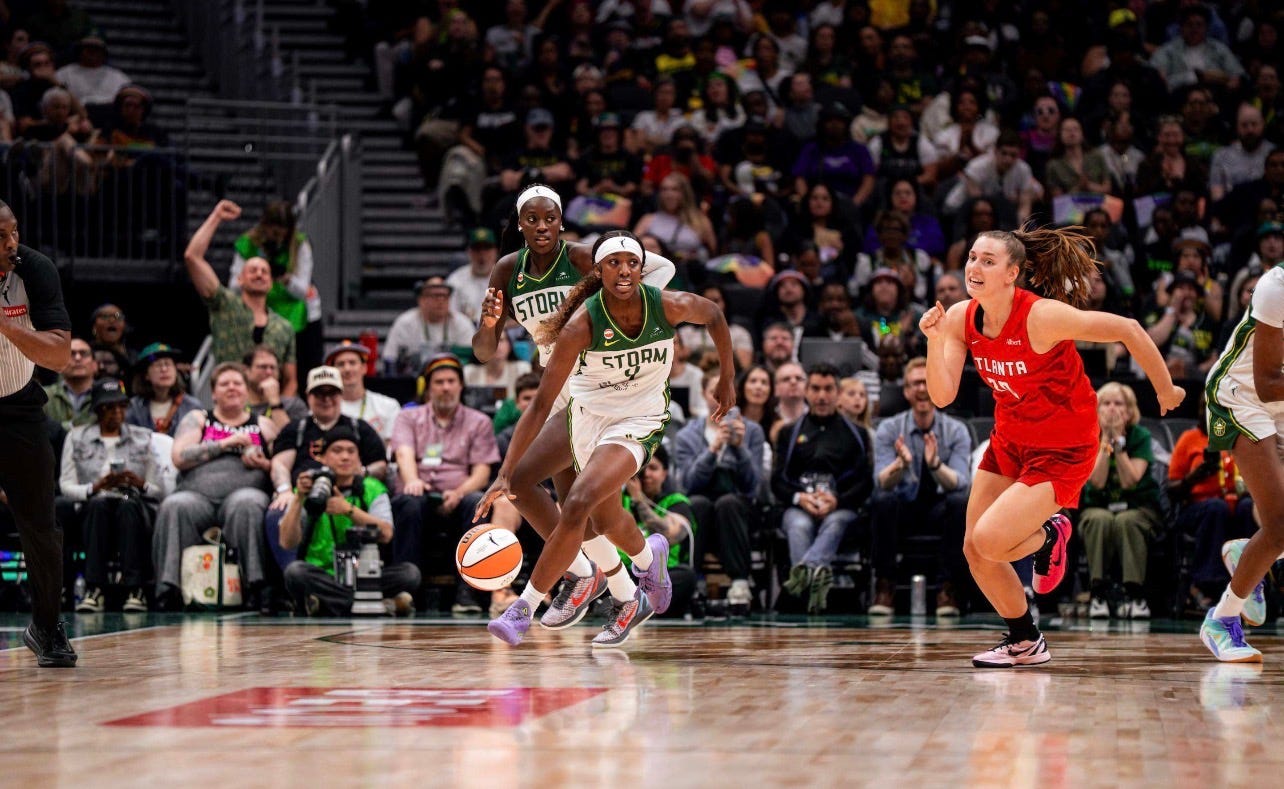
In Saturday night’s first matchup of the season between the Seattle Storm (5-15) and the Atlanta Dream (12-7), the Storm earned their second consecutive win after defeating the Dream 105-90. Two games earlier, they were on an 11-game losing skid before snapping it against the New York Liberty on June 22 and carrying that momentum into Saturday against Atlanta.
That’s a storyline in itself.
Seattle’s young frontcourt is finding ways to win against dominant teams and is on track for an epic comeback story if it continues.
If that wasn’t headline-worthy enough, rookie Awa Fam scored a career-high 21 points against Atlanta’s defense-heavy lineup while shooting 5-for-6 from 3-point range. Dominique Malonga became the youngest player in WNBA history to record eight career double-doubles after finishing with 16 points and 11 rebounds against Atlanta.
Flau’jae Johnson also recorded a double-double, scoring 24 points, grabbing 11 rebounds and adding four assists.
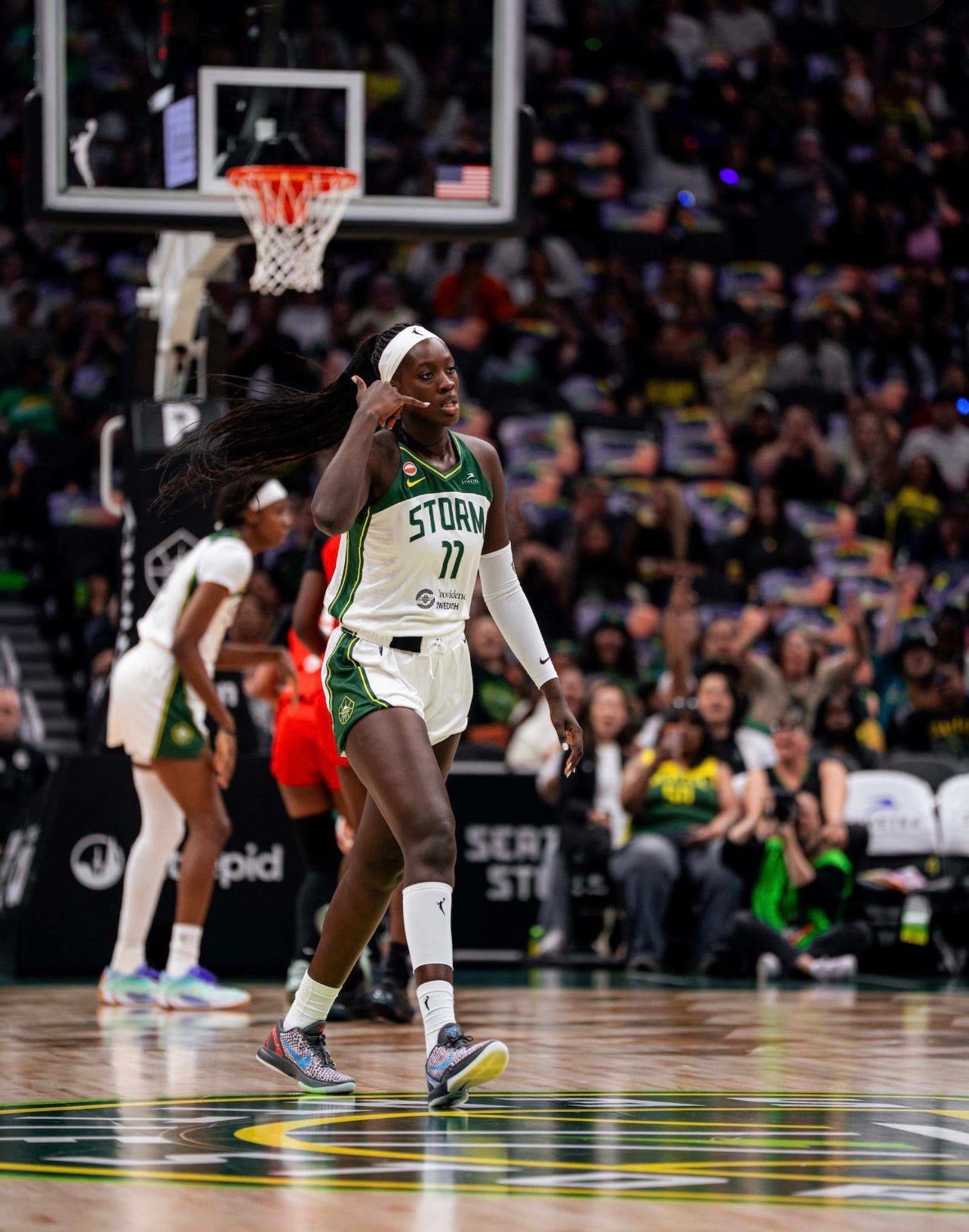
All five starters scored in double figures that night, bringing everything back to Johnson’s quote following Seattle’s June 10 loss to the Los Angeles Sparks.
“They say no rain, no flowers. And I feel like as long as we’re growing, it’s (progress) going to happen…the thing about this organization is that every day it’s like next play mentality and, and good people to be around, amazing vets and everybody’s trying to get better every day,” Johnson said.
Four games later, something clicked.
This, however, wasn’t the story tied to Seattle’s win over the Dream.
This matchup marked the first professional meeting between two-time WNBA All-Star Angel Reese and her former LSU teammate, Johnson. Though the two have had a murky history since shortly after winning a national championship together, there haven’t been any public developments regarding where they currently stand.
With 1:02 remaining and Seattle leading by 14 points (103-89), Johnson was seen hugging and high-fiving her teammates as if the game were already over. She then walked over to Reese for a high-five, which Reese dismissively waved off as she continued toward her own teammates.
That was it.
That’s the story.
And somehow, it became the headline of the night.
Not Johnson’s postgame comments about how emotional she became after seeing her team’s unity come together.
“We had some real conversations. Some real accountability conversations in real time and we held each other accountable,” Johnson said. “At the end, we said ‘we’re in this together,’ and we shook back and we took that lead at the end of the fourth quarter… I just felt like that was so powerful. It kind of brought tears to my eyes. I told y’all, no rain, no flowers.”
That was the night.
A full-circle moment that showed the heart and dedication behind a young team learning how to work together and pull off these wins. It was about the younger players stepping up and what this could look like in upcoming matchups against teams also playing with chips on their shoulders after tough losses of their own.
On the flip side, Atlanta dropped its third consecutive game for the first time since 2024. How will the Dream get things back together? What was behind these losses? And what could this look like against a young Mystics team that’s also finding ways to win?
There were so many directions this story could have gone, rather than media outlets like ESPN leading with a narrative that encouraged fans to dig deeper into a split-second interaction.
I’d be naïve if I pretended drama isn’t entertaining. It’s a great source of conversation and can quickly turn into a storyline that gets blown out of proportion. However, at the same time, it doesn’t benefit either player or reflect the actual story of the game.
So when we call ourselves a trusted media source but continue to find ways to stir up drama, what does that say about the future of sports reporting—and about putting the athletes first?
Are we chasing clicks, or are we finding the real story?
